
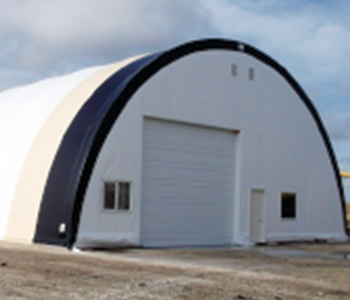
Site planners working in oil and gas know that infrastructure decisions made early in a project carry consequences through every phase. Structure type is one of those decisions. Fabric buildings have become a standard consideration for oil operations across upstream, midstream, and remote exploration applications — not because they’re the cheapest option on paper, but because they perform well against the specific constraints of oilfield project planning: compressed timelines, remote access, variable site tenure, and the need to move assets when the work moves.
This overview covers the key technical and operational factors site planners should weigh when evaluating fabric structures for their next deployment.
Structural Engineering and Load Compliance
The first question most site planners ask is whether a fabric building for oil operations meets the same engineering standards applied to permanent construction. For properly specified structures, the answer is yes.
Engineered truss fabric buildings are designed to site-specific snow, wind, and rain loads. Truss spacing options — typically ranging from 6′ to 16′ — allow the structure to be configured to meet or exceed local building code requirements. Stamped engineering documents are available for both Canadian and U.S. jurisdictions, which satisfies permitting, insurance, and corporate HSE requirements on regulated sites.
The steel framing components are powder-coated as standard, which matters in environments with accelerated corrosion exposure. Flame retardant fabric covers are available for applications where that classification is required by site safety protocols.
Widths run from 38′ up to 140′, with unlimited lengths, giving planners meaningful flexibility when sizing for specific applications without being forced into a standard footprint that doesn’t fit the site.
Foundation and Site Preparation
On conventional construction projects, foundation work is often a scheduling and cost driver that gets underestimated. On a remote oil exploration site, the calculus is more extreme. Mobilizing concrete equipment, managing pour schedules in cold weather, and waiting on cure timelines can add weeks to the critical path before a structure is usable.
Fabric buildings can be mounted on rig matting, screw anchors, concrete blocks, concrete footings, pony walls, or shipping containers. For sites already managing matting as part of the wellpad or lease road infrastructure, this can reduce foundation cost and scheduling impact substantially. On exploration sites where terrain and soil conditions make conventional foundations impractical, the flexibility in anchoring systems is a practical advantage rather than a compromise.
This is also where the temporary work site building category separates from permanent construction. Fabric structures are designed to be erected, used, and relocated without leaving significant site disturbance behind. For operations with reclamation obligations, that matters.
Applications Across the Project Lifecycle
A fabric building is not a single-use asset. Across a typical oil and gas project, the same structure can serve different functions as the operation evolves. Common applications include:
Exploration and Early Development: Oil exploration site buildings are often needed before permanent infrastructure is justified. Fabric structures can be on-site quickly, require minimal ground disturbance, and can be relocated when exploration activity moves to the next target. Equipment storage, core sample facilities, and crew support spaces are common early-phase uses.
Active Production: During production, oil field storage buildings are a recurring need. Parts, consumables, chemical storage, and equipment awaiting maintenance all require covered, secure space. Fabric buildings handle this function well and can be sized to match actual inventory requirements rather than forcing operations into undersized or oversized fixed structures. Insulated and heated configurations support year-round use, including in northern climates where ambient temperatures make unheated storage impractical for significant portions of the year.
Maintenance and Turnaround: Turnaround and shutdown events generate temporary space requirements that don’t warrant permanent construction. A fabric building for oil operations deployed during a turnaround provides covered workspace for equipment inspection, staging, and sub-assembly work, then relocates or redeploys once the event is complete. The clear-span interior design, with no interior columns interrupting the floor plan, supports equipment movement and staging efficiently.
Compressor and Equipment Enclosures: Fabric structures can be configured around compressor stations, generator sets, and processing equipment where weatherproofing and access are required. Side entrances can be incorporated into most designs, and door openings can accommodate large overhead doors up to 16′ wide and 15′ high, supporting the equipment access requirements typical of oilfield mechanical work.
Logistics and Deployment on Remote Sites
Access constraints are a fixed variable on most oilfield projects. A structure that requires multiple heavy transport loads and a large erection crew introduces logistics complexity that compounds on remote sites.
Fabric building packages ship as complete systems and can be erected by smaller crews in significantly less time than conventional steel construction. Suppliers with dedicated installation teams experienced in remote deployment reduce the coordination burden on site planners, since the erection scope doesn’t require sourcing local trade contractors who may not be available in remote areas.
For fly-in/fly-out operations or sites accessible only by winter road, the ability to stage and erect a structure within a defined access window is a meaningful operational advantage.
Asset Classification and End-of-Project Considerations
Permanent structures are fixed assets. When a project closes, they either transfer with the land or are demolished, both of which carry cost and administrative implications. Fabric buildings are relocatable, which gives finance and project teams options that don’t exist with permanent construction.
A structure deployed on an exploration lease can move to a production facility, then to a turnaround, then to the next project. The residual value is retained through the asset’s working life, and the end-of-project disposition is a logistics exercise rather than a write-off. For site planners working within capital approval frameworks, that distinction is worth raising during the project structuring phase.
Heating, Lighting, and Utilities
Fabric buildings can be fully insulated and integrated with heating, lighting, and ventilation systems at lower cost than equivalent permanent construction. The fabric itself transmits up to 80% of natural light during daylight hours, which reduces artificial lighting requirements during operating hours. On sites with limited or expensive power supply, that characteristic has a measurable impact on operating cost over the life of the deployment.
For heated applications in cold climates, the structure performs well when properly insulated and ventilated. Site planners specifying heated fabric buildings should confirm that the insulation package and HVAC sizing are appropriate for the ambient temperature range at the project location. See our fabric building customization options.
Specifying the Right Structure
When moving from evaluation to specification, the decisions that most affect suitability are width and length requirements, load design criteria for the site location, foundation type based on available site infrastructure, door configuration and size requirements, insulation and heating requirements, and whether stamped engineering documents are required for permitting.
FastCover works directly with site planners and project managers through the specification process, including providing stamped engineering for projects that require documented compliance. Structures are manufactured in-house in Winnipeg, Manitoba, with a 15-year prorated warranty on all buildings.
Contact FastCover to discuss specifications for your site →
FastCover Buildings has supplied and installed fabric structures for mining, oil & gas, agriculture, and industrial applications for over three decades. All structures are engineered to site-specific load requirements and manufactured in Canada.