On a mid to large-scale operation, the value of infrastructure is measured in uptime, asset protection, and what doesn’t go wrong. Fabric buildings have a well-established place in farm infrastructure as a flexible, cost-effective structure that handles clear-span storage.
Understanding where fabric buildings genuinely perform well helps producers make better infrastructure decisions. Here’s where canvas structures earn their keep across the farming calendar.
Equipment Storage: Protecting Capital Assets Year-Round
The strongest case for a fabric building on a farm is equipment storage. A modern combine, sprayer, or air seeder represents a significant capital investment, and the difference in useful life between a machine stored inside versus left outside through a prairie winter is measurable in both mechanical condition and resale value.
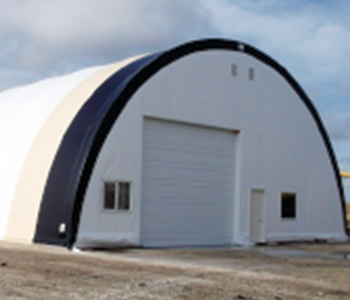
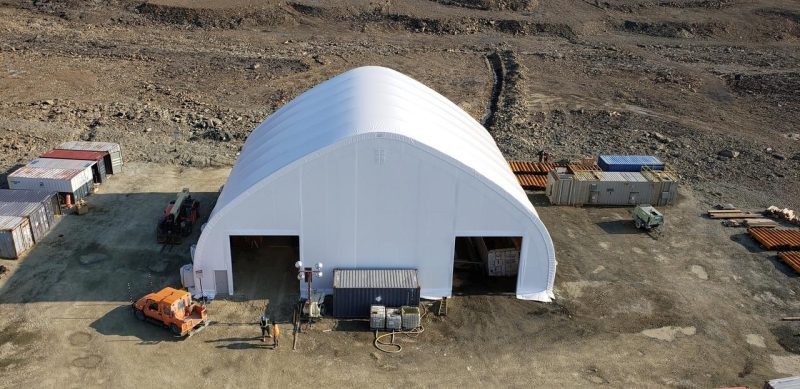
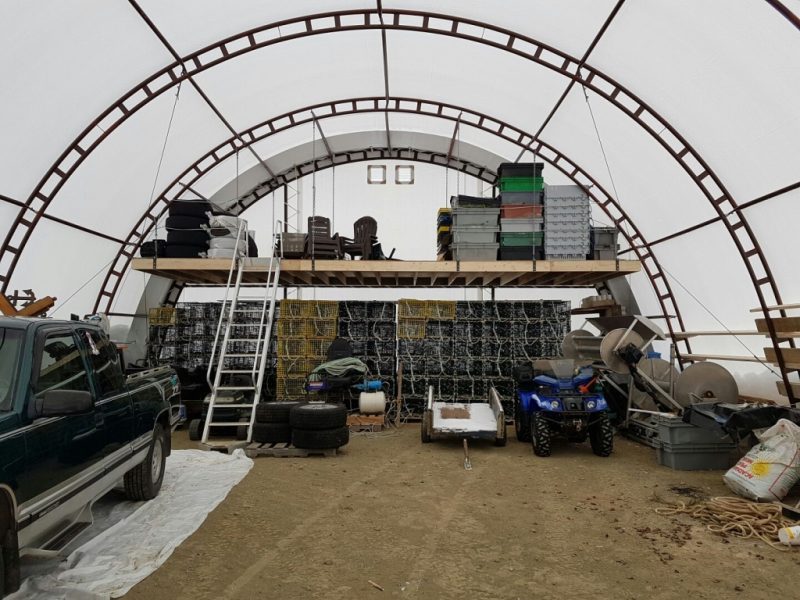
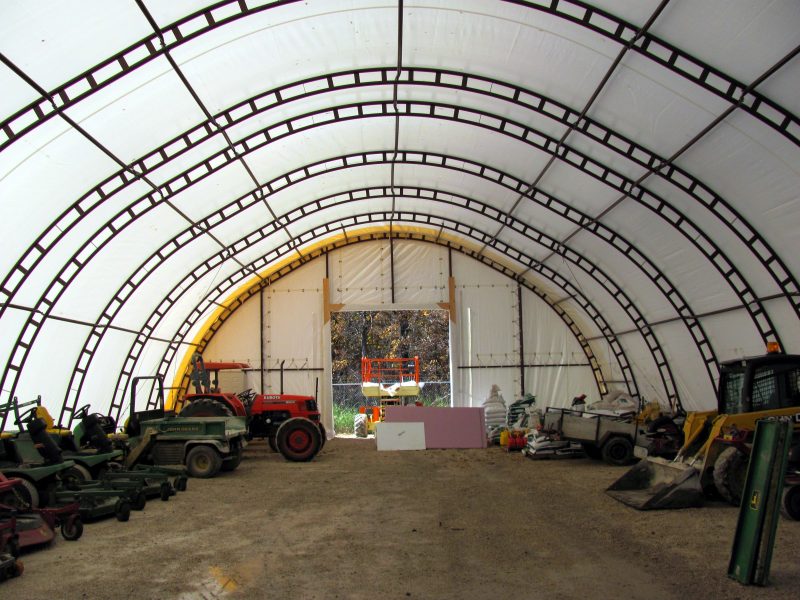
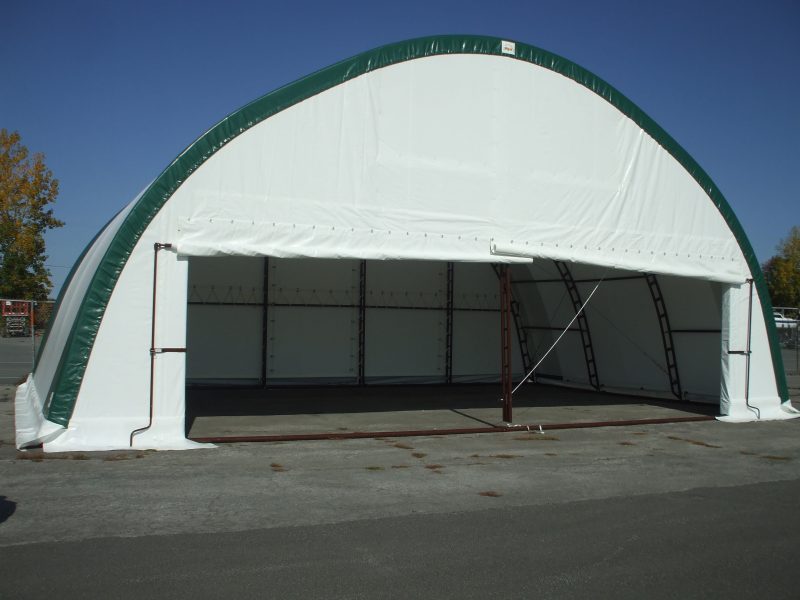
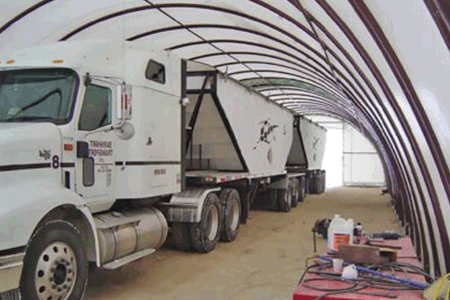
Fabric buildings are available up to 140′ wide with unlimited lengths, which means a single structure can house your operations large equipment without the layout compromises forced by narrower buildings. Clear-span construction with no interior columns means equipment moves in and out without routing around obstructions, which matters when you’re moving large machinery in tight windows.
For operations running multiple commodity crops with a corresponding equipment inventory, a fabric building sized to the fleet reduces the exposure to weather-related wear that accumulates quietly and shows up at trade-in or during a breakdown at the worst possible time.
Hay Storage or Cattle Shelter
Hay and forage storage is a natural fit for fabric structures. Fabric buildings provide weather protection from rain, snow, and UV degradation.
Large round bale and square bale storage both work well in fabric canvas buildings. Door configurations can be specified to accommodate the loading equipment being used, including large overhead openings for bale handling with a telehandler or loader.
For cattle shelter, the open-air nature of fabric buildings is well suited to the application. Fabric structures provide overhead and weather protection from precipitation without creating a sealed environment that requires mechanical ventilation to keep air quality acceptable. For mixed operations running cattle or dairy alongside crops, a single fabric building can cover both hay storage and shelter functions depending on how the interior is configured and what the season demands.
Winter Maintenance and Farm Shop Space
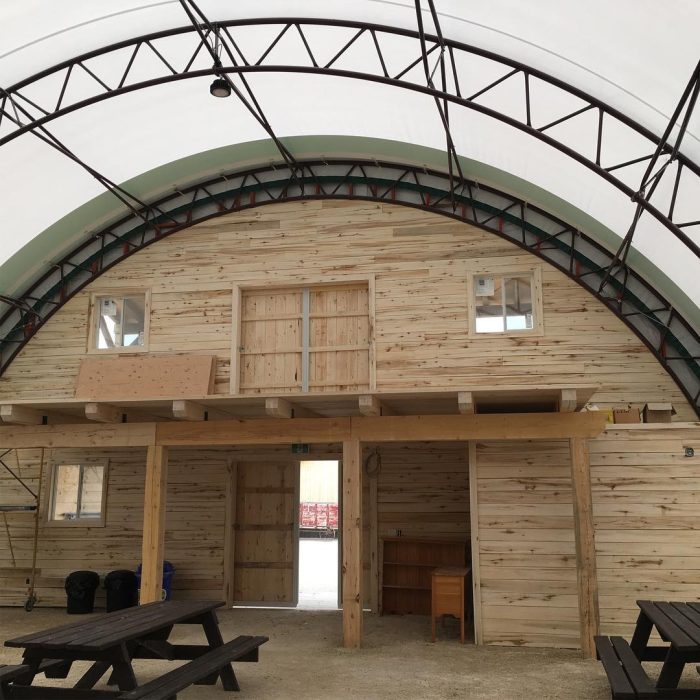
A fabric building gives workers a covered, heated workspace to run proper maintenance. The clear-span interior supports the movement and positioning of large equipment for mechanical work without the constraints of interior columns. End walls can be configured with overhead doors sized for the specific equipment being serviced, and electrical can be run to the structure to support lighting, power tools, and diagnostic equipment.
For operations expanding their maintenance capability without committing to a permanent shop addition, a fabric building delivers functional heated workspace at a fraction of the construction cost and timeline.
Seasonal Flexibility and Long-Term Value
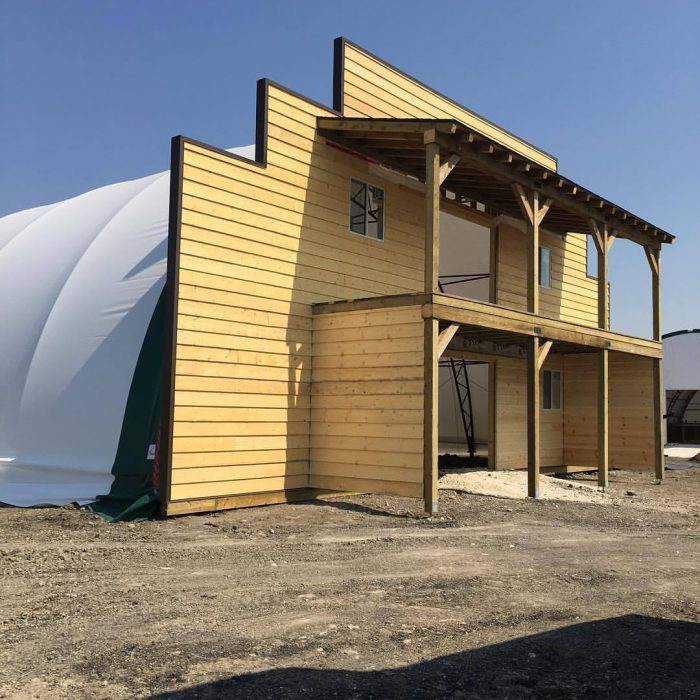
Fabric buildings are relocatable assets and allow for multi-purpose use throughout the year. With their customization options for foundations and doors, they quickly become a cost-effective solution to any agriculture operation requiring protection of assets, animals and personnel.
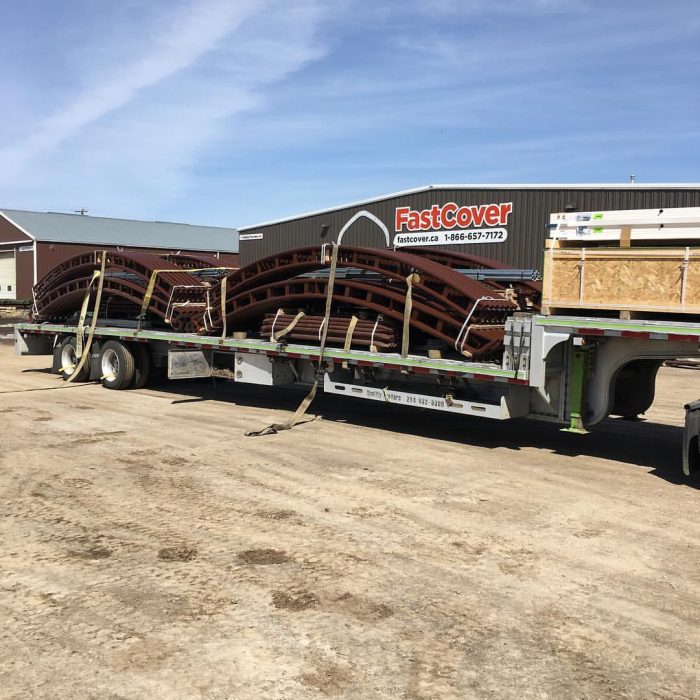
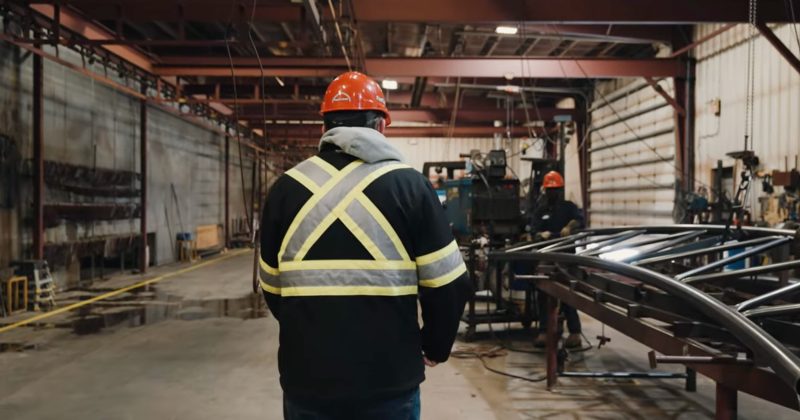
FastCover structures are engineered to site-specific snow and wind load requirements, manufactured in-house in Winnipeg, Manitoba, and backed by a 15-year prorated warranty. Stamped engineering is available for permitting and insurance requirements.
Contact FastCover to discuss sizing and configuration for your operation →