
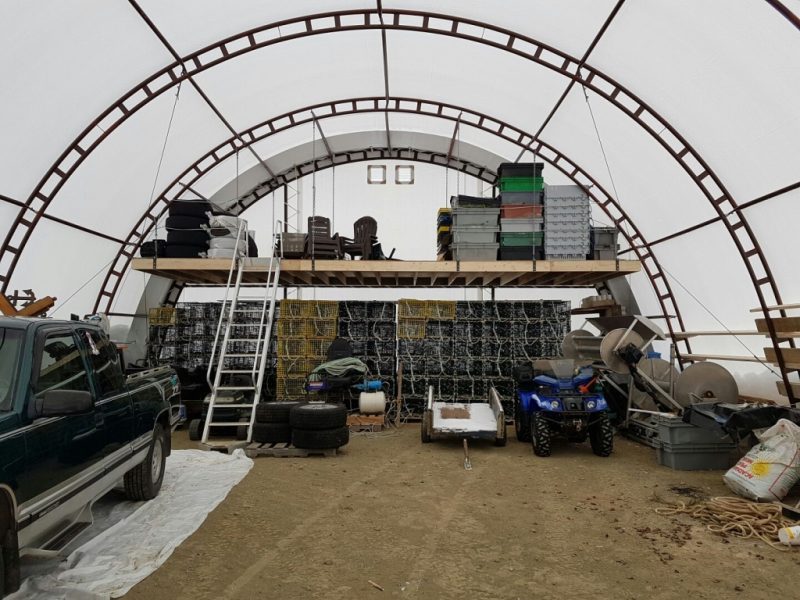
Most industrial yards weren’t designed—they evolved.
Space gets tight, materials start stacking up, and before long the yard becomes your primary storage system. It works, but it creates friction: slower movement, harder access, and more handling than necessary.
The goal isn’t just adding cover, it’s creating usable space that improves how the site runs.
Where Yard Storage Starts to Break Down
At a certain point, outdoor storage creates operational drag:
- Equipment and materials get harder to access
- Loading and unloading slows down
- Layout becomes inconsistent across the yard
- Crews spend more time moving things than using them
This isn’t a storage problem; it’s a workflow problem.
What Covered Storage Should Actually Do
Adding covered space only works if it improves flow.
A well-planned structure should:
- Support drive-through or straight-line movement
- Keep materials close to where they’re used
- Reduce double handling
- Create clear zones for different inventory types
- Maintain access for loaders, trucks, and forklifts
Why Fabric Buildings Fit the Job
Fabric buildings are used in industrial storage because they solve for speed and layout, not just coverage.
They give you:
- Clear-span interiors (no columns in the way)
- Full equipment access with wide openings and height clearance
- Fast install timelines without tying up operations
- Flexible sizing, from single-bay to large-scale storage
- Expandable length as storage needs increase
You’re not building around constraints, you’re building around how your site operates.
Designing Around Movement, Not Just Storage
Before adding a structure, the key question is:
How should material move through this space?
That drives everything:
- Door placement
- Building width and height
- Traffic flow (in, out, or through)
- Storage layout inside the building
Fabric buildings work best when they’re treated as part of the workflow, not just a place to put things.
Bridging Yard Storage and Permanent Facilities
Not every operation needs another warehouse.
Sometimes you need:
- Covered bulk storage
- A staging area near production or shipping
- Equipment storage that doesn’t tie up indoor space
- Room to grow without committing to a full build
Fabric buildings fill that gap. And because they can be extended to virtually unlimited lengths, they scale as your operation changes.
The Bottom Line
If yard storage is slowing things down, adding cover isn’t the fix; better layout is.
Fabric buildings give you the ability to:
- Create clean, usable storage zones
- Improve access and movement
- Add space without overbuilding
It’s a practical way to make the yard, and the operation, run tighter.