
If you run an auction yard, you already know the problem: space is never just “space.”
It’s where inventory sits before sale day.
It’s where buyers walk the rows.
It’s where equipment gets staged, cleaned up, and moved fast when the yard is full.
And when weather hits, snow, rain, wind, it doesn’t just make things uncomfortable. It slows everything down and chips away at how buyers perceive the assets you’re selling.
That’s why more auction houses are adding fabric buildings, because they need covered, functional space that keeps operations moving year-round.
This article breaks down where fabric structures actually help auction businesses day to day, and why they’ve become one of the most practical infrastructure upgrades for growing yards.
Why Auction Yards Add Fabric Buildings
Auction operations don’t run like warehouses. Inventory is constantly changing, the yard layout shifts, and sale days bring a completely different level of traffic and pressure.
A fabric building gives you:
- Covered space without tying up permanent construction capital
- Room to stage and store equipment without cluttering the yard
- A better buyer experience on sale day
- Protection for assets that can’t afford to sit exposed for months
- The ability to expand quickly as your inventory grows
It’s not just about having a nicer building. It’s about running a smoother operation.
Where Fabric Buildings Actually Help Auction Operations
-
Equipment and Vehicle Storage That Protects Asset Value
If you’re selling tractors, trucks, trailers, or industrial equipment, you know what exposure does over time.
Snow buildup, hail damage, sun fading, rain corrosion—it all affects presentation, and presentation affects bids.
Covered storage helps you keep high-value inventory in better condition, especially for equipment that may sit for weeks or months before the auction.
-
Indoor Display Space Buyers Take Seriously
Buyers don’t just bid on listings, they bid on confidence.
A covered inspection area makes a difference for:
- Featured assets
- Higher-dollar equipment
- Pre-auction walkthroughs
- Bad-weather sale days
When buyers can take their time looking things over without fighting the elements, you reduce friction and improve the experience.
-
Sale-Day Staging and Traffic Flow
Auction day is controlled chaos.
You’ve got people arriving, paperwork moving, equipment being staged, and lots turning over quickly.
A fabric building can give you dedicated space for:
- Check-in and admin
- Buyer meetings
- Lot staging before items hit the block
- Covered flow-through areas when the yard is packed
It keeps things moving and keeps the site more organized when it matters most.
-
Maintenance and Prep Bays That Don’t Steal Yard Space
Most auction houses do at least some level of prep:
- Cleaning
- Minor servicing
- Inspections
- Battery charging
- Equipment checks
Having a covered bay means that work happens efficiently, without tying up outdoor yard space or forcing your team to work around weather.
Fabric buildings can be outfitted with lighting, ventilation, and large access doors to support this kind of daily use.
-
Overflow and Seasonal Storage as Inventory Expands
Every auction business hits the same point: the yard fills faster than expected.
Seasonal spikes, bigger consignments, more frequent auctions—it adds up.
Fabric buildings are modular, which means they can be extended to virtually unlimited lengths as your needs grow. Instead of rebuilding or relocating, you can scale your covered space alongside the business.
Why Fabric Buildings Make Sense for Auction Businesses
Fast Installation Without Long Downtime
Auction schedules don’t pause for construction.
Fabric buildings go up faster than traditional structures, typically within days, so you can add usable space without disrupting operations for months.
Lower Cost Than Permanent Builds
Many auction yards don’t need a fully permanent facility, they need functional infrastructure that pays off quickly.
Fabric buildings typically require less capital up front while still delivering long-term value.
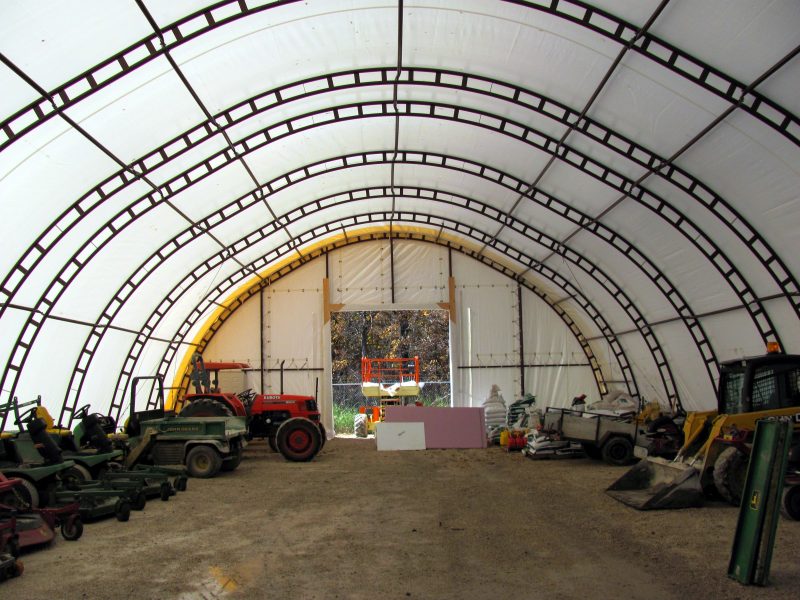
Clear-Span Interiors Built for Equipment Movement
No interior columns means you get full usable space for:
- Driving equipment in and out
- Flexible staging layouts
- Vehicle rows
- Wide traffic lanes
That matters when your inventory isn’t pallets, it’s machines.
Engineered for Real Weather
Auction yards operate year-round, and weather is part of the job.
FastCover’s quality fabric structures are engineered for:
- Heavy snow loads
- High winds
- Harsh seasonal exposure
So you’re not adding a temporary shelter, you’re adding a reliable operating asset.
Flexible Foundation Options for Working Yards
Fabric buildings can be installed on:
- Concrete pads
- Blocks
- Piles
- Shipping containers
That flexibility is a big advantage for auction sites where layouts evolve and permanent foundations aren’t always ideal.
What Auction Owners Should Think About Before Building
Before adding covered space, the key question isn’t “Do we need a building?”
It’s:
- What part of the operation is getting squeezed right now?
- Do we need storage, staging, inspections, or sale-day flow?
- Do we need drive-through access?
- Are we planning for growth over the next 3–5 years?
The best fabric buildings are the ones designed around how your auction yard actually runs.
Covered Space That Supports the Way Auctions Work
For auction houses, a building isn’t just about square footage, it’s about:
- Protecting inventory
- Improving buyer confidence
- Reducing sale-day friction
- Keeping operations moving in every season
- Expanding without overbuilding too early
Fabric buildings have become one of the most practical ways auction businesses add infrastructure that supports real throughput and growth.